
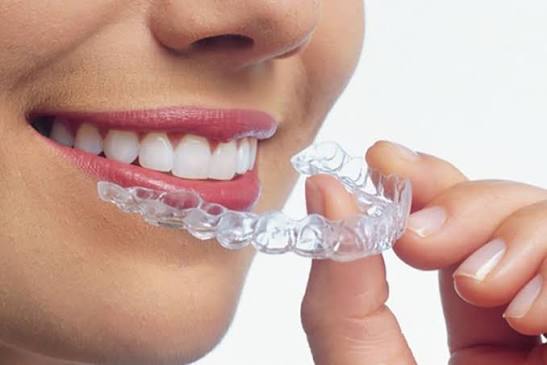
Invisalign Treatment: Clear Aligners Explained
Straightening your smile discreetly with clear aligners
The idea of wearing braces as an adult makes many people uneasy; plenty put off orthodontic treatment because of work, social life or aesthetic concerns. Invisalign straightens teeth gradually with clear, removable aligners, offering a far less noticeable alternative to traditional braces. In this article we explain how Invisalign treatment works, who it suits and what the process looks like.
What Is Invisalign?
Invisalign is an orthodontic treatment in which a series of thin, clear, removable plastic aligners gradually moves the teeth into the desired position. Because it has no metal brackets or wires, it is barely visible and more comfortable in daily life.
How Does It Work?
Treatment starts with a digital intraoral scan or impressions. Using this data, every stage of tooth movement from the current position to the planned result is simulated on a computer, and a personalised series of aligners is produced from the simulation. Patients usually switch to a new aligner every 2–3 weeks; each aligner applies gentle, controlled pressure to move the teeth step by step.
Who Is It Suitable For?
Invisalign works particularly well for:
- Mild to moderate crowding
- Gaps or spacing between teeth
- Mild bite problems (such as crossbite or deep bite)
- Adults and teenagers who can wear their aligners consistently for the recommended time
In cases of severe skeletal discrepancy or complex tooth movements, traditional braces or a combined approach may be more appropriate. Final suitability is determined after a detailed orthodontic examination and digital scan.
The Treatment Process Step by Step
1. Examination and Digital Scan
A 3D digital scan of the teeth and jaws is taken; this data forms the basis of the treatment plan.
2. Treatment Simulation
The movement of the teeth from start to planned result is shown step by step on a computer, so you can see the planned outcome in advance.
3. Wearing the Aligner Series
The custom aligners are worn in sequence; each should be worn 20–22 hours a day and removed only for eating and brushing.
4. Regular Check-ups
As treatment progresses, check-up appointments at set intervals monitor progress and the plan is updated if necessary.
If you live abroad, it is important to agree before starting how check-ups and aligner changes will be managed. For the pros and cons of starting clear aligner treatment in Turkey and continuing it at home, read this guide to Invisalign and clear aligners in Turkey.
5. Keeping the Result with a Retainer
Once the aligner series is complete, a retainer must be worn for the recommended period to keep the result stable.
Advantages over Traditional Braces
- Clear design that is barely noticeable in daily life
- Removable, so eating and oral hygiene are not restricted
- No metal brackets or wires, so less irritation of the cheeks and lips
- The treatment process can be previewed with a digital simulation
Things to Keep in Mind
The success of Invisalign depends largely on patient compliance; not wearing the aligners for the recommended time can lengthen treatment or affect the result. Not every case is suitable for this method either; where complex tooth movements are needed, your dentist may recommend an alternative or combined approach.
How to Care for Your Aligners
Clean the aligners gently each time you remove them and before putting them back in, and do not expose them to hot water. Brush your teeth at least twice a day and floss as usual. If an aligner is damaged or lost, let your dentist know without delay.
Frequently Asked Questions
Does Invisalign hurt?
A mild feeling of pressure for a few days when switching to a new aligner is normal; it usually does not turn into significant pain.
How long does treatment take?
It depends on the complexity of the case: from a few months to a year for mild to moderate cases, and longer for more complex ones.
Does wearing aligners affect speech?
There may be a short adjustment period in the first few days; speech soon returns to normal.
Can other people see the aligners?
Thanks to their clear design, they are largely unnoticeable, even at close range.
Conclusion
Invisalign offers patients who hesitate about orthodontic treatment for aesthetic reasons a much less noticeable and more comfortable alternative to traditional braces. The best way to find out whether it suits your case is to start with a detailed examination and digital scan.
Note: This article is for general information only; a personal treatment plan always requires an examination by a dentist or orthodontist.
